
Guides
What a fragrance maker has to know
The rules that decide whether a perfume can be sold, written out properly: what each one asks for, which market it belongs to, and the numbers as they stand today. Free to read, no sign-up, no email asked for.
-

Notes, accords and the pyramid
What top, heart and base notes actually are, why a fragrance changes on skin over hours, how an accord is built, and what the pyramid does and does not tell you.
Checked 13 August 2026
-

A perfumery glossary
Accord, absolute, sillage, fixative, chypre, INCI, Annex III and sixty more, defined in a sentence each: the words used at the bench, in the trade and in the regulation.
Checked 13 August 2026
-

The IFRA Standards, explained
What the IFRA Standards are, how the twelve product categories work, how a restriction is applied to a finished fragrance, and what an amendment does to a formula you already sell.
Checked 12 August 2026
-

EU fragrance allergen labeling
Which fragrance allergens must be named on an EU label, the 0.001 percent and 0.01 percent thresholds, what Regulation (EU) 2023/1545 changed, and what the two 2026 and 2028 dates actually mean.
Checked 12 August 2026
-
The EU fragrance allergen list
Every declarable fragrance allergen in Annex III, with the name that goes on the label, what a perfumer calls it, its entry number and its CAS. Free, current, and generated from the Official Journal text.
Checked 13 August 2026
-

Selling a fragrance in the European Union
The paperwork behind a perfume sold in the EU: the responsible person, the Product Information File, the safety assessment, CPNP notification, the label under Article 19, and where CLP applies too.
Checked 12 August 2026
-

Selling a fragrance in the United States
What MoCRA requires of a fragrance business: facility registration, product listing, adverse event reporting, the small business exemption, FDA labeling rules, California SB 312 and Proposition 65.
Checked 12 August 2026
-
Selling a fragrance in Great Britain
How the GB cosmetics regime diverged from the EU after Brexit: a separate responsible person, SCPN instead of CPNP, the shorter allergen list, the GB mandatory classification list and no UFI.
Checked 12 August 2026
-
Selling a fragrance in Canada and Australia
Two markets most guidance ignores, and neither follows the EU: Canada notifies the product and keeps its own Hotlist, Australia regulates the chemicals in it.
Checked 13 August 2026
-

What you can and cannot say
Natural, clean, chemical-free, hypoallergenic, long-lasting: which claims are allowed, which need evidence you must already hold, and which turn your perfume into a different kind of product.
Checked 13 August 2026
-

Candles, diffusers and room sprays
None of them is a cosmetic, so the cosmetics rules do not apply and a different set does: CLP classification and labeling, IFRA categories 10 to 12, and general product safety.
Checked 13 August 2026
-
Safety data sheets and CLP labels
When a fragrance needs a safety data sheet and when it does not, what the sixteen sections must say, where a classification comes from, and what goes on a CLP label.
Checked 13 August 2026
-

Weighing, dilutions and strength
Why drops are not a unit, how to make and label a 10 percent dilution, what balance readability really buys you, and what the percentage in an eau de parfum is a percentage of.
Checked 12 August 2026
-

When a material you rely on is restricted
What to do when a limit drops or a material is prohibited: how to tell which of three problems you have, how long you have, how to substitute properly, and what paperwork the change drags behind it.
Checked 13 August 2026
-
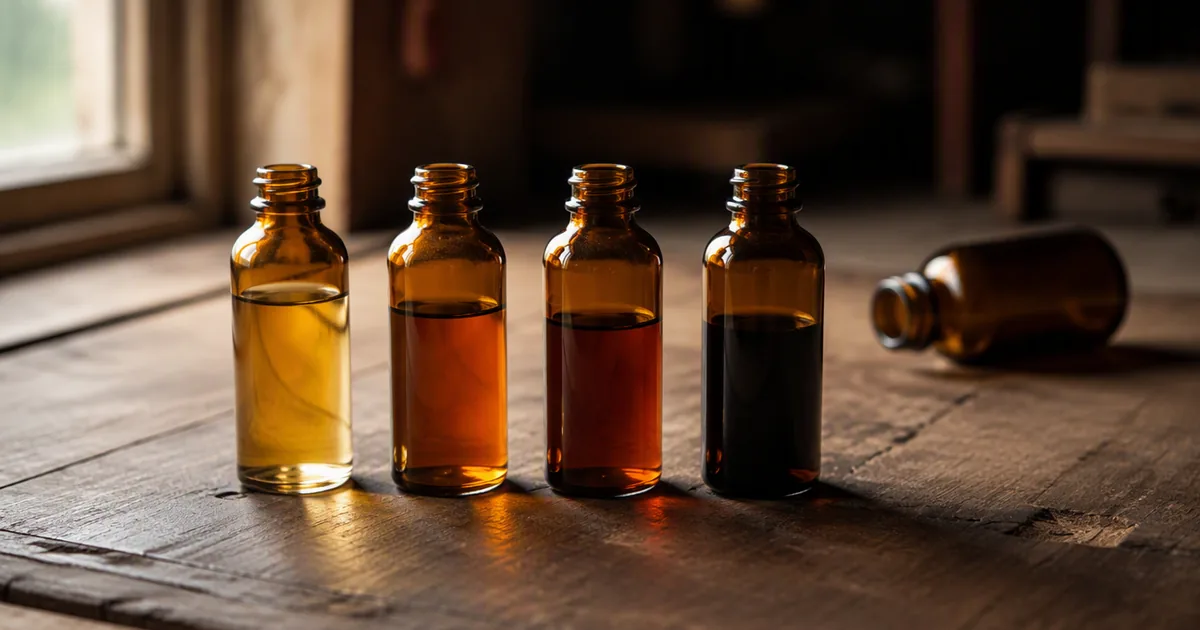
Shelf life and storage
How long an aroma material lasts is decided by its chemistry, not its smell: the figures by constituent class, why cool storage doubles them, and why an oxidized oil is a safety question.
Checked 13 August 2026
The software that keeps all of this straight
Orris Bench is perfumery formulation and compliance in one application, on your own machine. It is not on sale yet. Ask to be told when it is, and nothing else.